January Newsletter 2026
Highlights of the Tri2O Awards Night
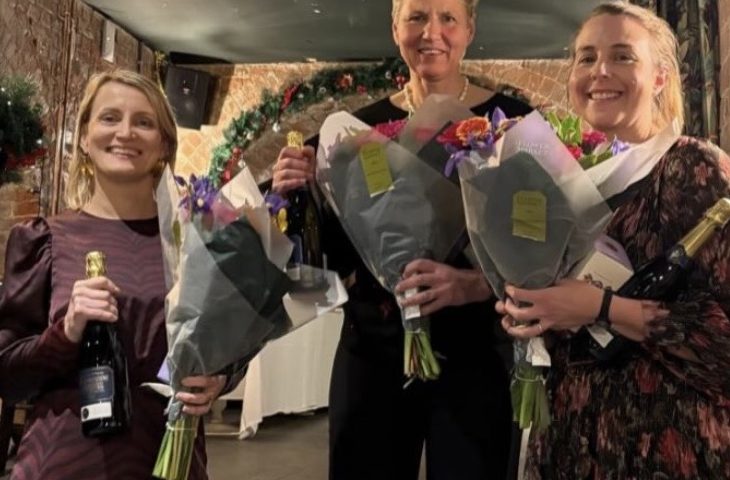
The Tri2O Awards Night is traditionally the club’s biggest social event of the year. This year we decided to bring some festive vibes and moved it to December, and our outgoing social secretary Stella picked a gem of a venue right in the centre of town, for her swansong. The Three Guineas had a great downstairs area which we commandeered, and there were sparkles and partywear aplenty. It’s always a treat to see fellow club members scrubbed up and out of lycra, and of course is the perfect opportunity to say “I didn’t recognise you with your clothes on”!
We were treated to a delicious buffet and this meant lots of mingling too. It was great to have a mix of longstanding members and newer joiners, and we hope everyone met someone new. Aside from the opportunity to socialise and talk non-triathlon, the Awards night enables us all to reflect on the achievements and memories of the year, celebrating so much more than just race results. Prizes were awarded for Female and Male winners of the Club Championships in all categories of Sprint, Standard, Middle and Long distance triathlon, and multisport categories (to include Duathlon, Aquabike and Aquathlon).
In addition to the Club Champs, there are a few special awards, nominated and voted for by you, the membership. This year, we had a new award – the Mark Stokes Against All Odds Award – to add to the different ways in which we celebrate members’ contributions to the club and to triathlon. We also said our goodbyes and thank you’s to three committee members who have worked behind the scenes over the past year(s) to support the club’s activities and successes: Stella Ferguson Social Secretary, Kasia Kurowska Communications Officer, and Nora Holford Club Secretary.
For those who weren’t there on the night, here’s a list of the Club Championships & Award Winners – well done to all!
Club Championship Winners
Sprint Distance : Andi Jay & Francis Martinez
Standard Distance : Nora Holford
Middle Distance : Nora Holford
Full Distance : Clavelle Olivier-Smith & Mark Berriman
Multisport Event : Sally Waterman & Adam David Phillips
Club Nomination Awards:
Henderson Personality of the Year : Stella Ferguson
Mark Stokes Against All Odds : Kate Kitto
Most Engaged Newcomer : Ocean Allen
Most Improved : Keira White & Alex Marsh
Membership Update
Please join me in welcoming our new members to the club:
I hope you will enjoy training with us. For anyone that wants to get the most out of the club and would like a call to talk this through – please let me know.
Coach Corner
Tips for Winter Training
Days are short, weather is unpredictable, and race season feels like an eternity away. For many reasons, training can feel like harder work at this time of year. Thanks to member Esther for suggesting this topic for the newsletter – hopefully here are some ideas to keep you motivated and safe.
What sort of training should I be doing?
Having fun (but I say this for every time of year, to be honest!). But this is the time of year to get yourself the foundations for more race-specific training nearer to your race season, and there are a few different aspects of “fitness” to prioritise.
- Skills & technique (improving efficiency). This could look like (not an exclusive list):
- Swim: Stroke drills in the pool, slowing down to swim mindfully, getting a video analysis, mixing up your strokes, not worrying so much about how fast you are at the moment.
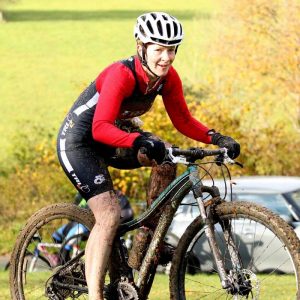
- Bike: Pedalling drills on the turbo e.g. high cadence without bouncing, spin-ups, pedal stroke quadrants, going off road (cyclocross, or mountain biking), not worrying about your FTP.
- Run: Technique drills (but ideally you’d want these coached) e.g. butt kicks, strides, postural cues & visualisations, trail running (great for balance, stability, strength, fun, adds variety to each stride), focus on heart rate training & RPE.
- Endurance “base building” – traditionally long slow easy training, but this isn’t always easy when it’s cold and dark outside! This is where your weekends and going off road for bike & and run can be hugely beneficial – not so much ice to contend with, and the wind chill is less when riding at lower speeds off road. Aim to train (mostly) at an intensity that allows you to have a conversation without getting out of breath, and breathe through your nose.
- Strength & mobility – this could look like:
- Cross training e.g. climbing, hiking, rowing
- Sport-specific strength e.g. big gear work on the bike (careful of your knees), sprints & hills (bike & run), resistance aids for swimming (paddles, drag shorts, pull buoy & ankle band, parachute), short sprints – beware really big paddles unless you have excellent stroke mechanics, and don’t overdose on them.
- Weights – specific S&C coaching, Circuits, Pilates, Kettlebell classes, even Body Pump classes, which although not highly triathlon-specific, will still give you some all-round strength. The best strength training is the stuff you’ll do consistently.
- Yoga: also great for training body awareness, mindful movement & balance.
- Intensity – it can be a great time to do high intensity short intervals, in any of the disciplines, to improve aerobic capacity and . The indoor bike trainer is particularly suited to these, and you can either do traditional VO2 max style intervals (RPE ~8-9) for 30s – 3 min with equal or slightly less recovery, OR longer recoveries with intervals on the shorter end of this range (think 20-30s) to prevent overloading too early in the season
How can I train safely and stay motivated?
- Consistency now will build a more resilient body for adding harder work – build a sustainable routine
- Having a stronger foundation will reduce injury risk further down the line
- Don’t be tempted to do too much and burn out or get injured before race preparation comes around
- Have your big goals visible to remind you why you’re training e.g. a post-it on the fridge, or the bathroom mirror (and move these around often to stop them becoming “invisible”!)
- Put your training in your diary/calendar, make it part of your life plan
- Stick to well-lit areas if running in the dark, make sure you wear high visibility clothing, head torch etc. – this may mean running lots of laps, or out and back routes. The club run sessions can be great for this.
- If you don’t feel like training, just take the first step to get changed into your gear. Start with a walk. And if it’s still not happening, then your body is probably trying to tell you something, so listen!
- Consider making a commitment to train with others – it’s much harder to bail if someone else is depending on you! That’s also a big benefit of being in a club 😊
- Early morning training – getting up when it’s dark – pack all your stuff the night before.
- If there’s ice on the roads, I don’t ride my road bike – I don’t think it’s worth the risk for me, but it’s a personal choice. Another reason to vote for off-road! Be careful running on the pavements too – look out for the areas in the shade and black ice. Grass in the park is often safer.
- If you do ride on the roads:
- Take it steady, particularly on corners and descending – this is not the time to be chasing your Strava segments!
- Try to remain relaxed and responsive to your bike: tensing up will not help you control your bike.
- Don’t brake whilst cornering – slow down before the bend, then ride around
- Look up ahead, look where you want to go, not at your front wheel
- When cornering, put your weight more through the outside pedal e.g. if you’re turning left, your right leg is straight and weight through the right foot, your left foot at the top of the pedal stroke, knee bent. Shift your hips slightly to the outside of the turn too.
- If possible, learn to descend “on the drops” as you are more stable with your centre of gravity lower, and have more leverage to brake quickly if you need to.
- Remember, something is almost always better than nothing; you might have planned an hour session but are short on time – doing 30 minutes is still worth it compared to skipping it all together.
Caveat with running hill reps:
As is usually the case with training, those activities which reap the highest rewards often come with higher risk. If you have a history of run injuries (particularly calf, Achilles or knees), then do be conservative. Start with very gradual inclines, don’t sprint from a standstill (build into your pace), walk the descents, and stop if you have any niggles or pain at all. Running up steps can be a much safer way to get similar benefits, if this is an option available to you.
Don’t hesitate to ask any questions in the club WhatsApp community – there is a wealth of knowledge and experience within our membership and lots of people keen to help and train together!
Georgia Jackson
Head Coach
My First Year Doing Ironman
My 2026
Written by James Lemin
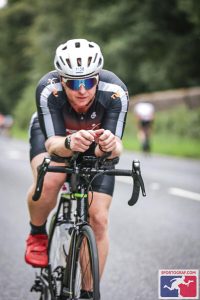
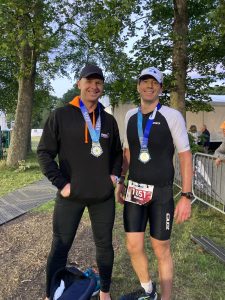
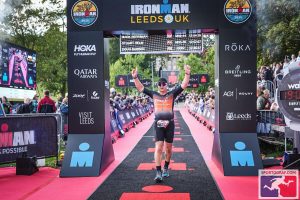
Training for a physical event like triathlon — in my case, a half Ironman — is not only a huge commitment, but also a physical and mental journey.
While training, I constantly ask myself “why?” As I plough up and down the pool, sit cycling on my indoor trainer, or run the roads of my local area, my mind drifts between past experiences and future challenges.
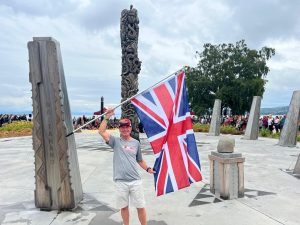
I look back on my achievements since beginning this journey in 2022, when I hadn’t even attempted a triathlon. Since then, I’ve competed in several events: Luxembourg, Swansea, Sunderland, Menen (European Championships), Weymouth, Taupō (World Championships), and back to Weymouth — where I’ve now qualified for the 2026 Half Ironman World Championships.
Visualising my achievements beyond the race fuels my determination during the toughest moments. Travelling the world — Belgium, New Zealand, Wales, and soon Nice, France — climbing mountains in Morocco, Wales, and Scotland, or learning new skills all remind me why I keep going. With each lap and every kilometre, I tell myself that the resilience built here will serve me well when chasing other dreams. The discipline, courage, and self-belief developed in training don’t just prepare me for race day, but for every future adventure — especially playing with my grandchildren.
One important thing always stays clear to me: none of this would have been possible without the love and support of my family. They say consistency is key in training, but in my mind what truly matters is family. Training must fit around everything else and, sadly, often comes last.
I have never completed a half Ironman in under seven hours (with the exception of Weymouth 2025, when the swim was cancelled). I have never competed against anyone else — I compete against myself. If I cross the finish line, I believe I am a winner, even if I’m the only one in my age group.
If you’ve read this far, stop. Find a race — be it a Sprint, Standard, or, if you’re foolish (and I hope you are), a Middle or Full distance event — and start training. Good luck on your journey. If I can do it, so can you.
I enjoy triathlons because, at 80 years of age, they keep me fit enough for my grandchildren, who run and jump all over me.
Social Media Corner
Follow us on Facebook | Twitter | Instagram for the latest updates!
We would love to hear from you
We would love to hear from you, particularly if you have taken on a new challenge or are new to triathlon. If you would like to be included in the next newsletter, please send your contribution to info@tri2o.club.

Click here to download the pdf copy of the newsletter.